


















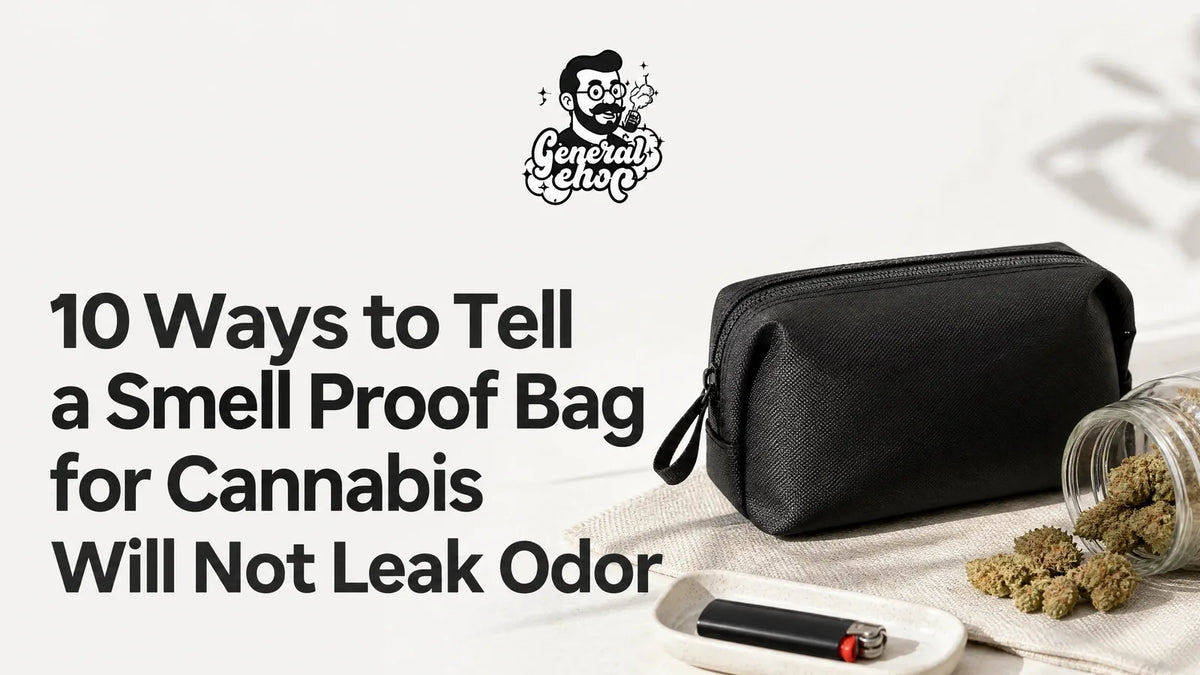
The best smell proof bag for carrying cannabis discreetly is a carbon lined bag with a truly sealed zipper and tight seams that matches your daily carry, because odor leaks usually come from closures and worn lining, not “strong smell” alone.
Here’s what matters most right now:
- Activated carbon works like an odor sponge, but it saturates and weakens with use.
- A sealed zipper is about tight track alignment, not just having a zipper.
- Dense stitching and clean edge binding matter because seams can leak like vents.
- Pick the form factor first so you actually keep it closed and used daily.
- Avoid overstuffing, forcing a bag shut is a fast path to odor escape.
- A simple inner pouch system creates a double barrier and reduces odor load.
- Carbon performance lasts months to years depending on heat, humidity, and frequency.
- Do a baseline at-home sniff test when the bag is new to spot decline later.
At General Shop, we focus on carbon lined options you can compare by carry style, from the Ooze Smellproof Wristlet Bag for minimal runs to the Ooze Smellproof Crossbody Bag or Blazy Susan Fanny Pack for daily hands-free carry, including lock-equipped choices like the Ooze Smellproof Backpack Classic with Combo Lock when access control matters.
Start by checking the one feature that does the most heavy lifting: carbon lining that is thick enough to matter, because it is the core layer that actually traps odor before any zipper can “seal” it.
1. Carbon lining that is thick enough to matter

If a “smell proof” bag fails on day one, the most common cause is a carbon lining that is too thin to do real work. Activated carbon functions like an odor sponge: odor molecules stick to activated carbon's porous structure through adsorption, so the scent gets trapped in the lining instead of drifting out into the room.
Thickness matters because carbon saturates. A thicker, more continuous carbon layer gives you more surface area to trap odor and it takes longer to load up and start letting smell through.
Red flags are easy to spot in-hand: flimsy lining that feels like a single sheet, patchy carbon panels with gaps at folds or corners, or areas where the interior looks inconsistent from one side to the other. Those weak spots saturate first and become the leak points you notice immediately.
2. Zippers that close like a seal, not a gap
“Sealed” at the closure means the zipper track meets cleanly, tooth-to-tooth, with no waviness, buckling, or fabric tension that pulls the teeth apart. A carbon lined bag can do its job, but odor will still escape if the zipper track is misaligned or stressed by overstuffing.
Pay closest attention to the zipper ends, corners, and the first inch after the turn, because those spots leak first. That is where tiny gaps form when the zipper tape is bent, when the stitching loosens, or when the zipper slider does not fully seat at the stop.
Use a full-closure habit every time. Half-zips and “almost closed” corners create a straight path for odor to travel out through the teeth, especially when you move around and press the bag against your body.
3. Seams that are tight enough to not breathe
A smell proof bag can have a strong carbon lining and still leak because seams are an unglamorous escape route. You are looking for tight stitch density with clean edge binding, meaning the seam line is compact, even, and wrapped or taped so air does not wick through needle holes or fray paths.
Stress points are where real-life carry breaks marketing claims: corners, zipper ends, and any gussets that let the bag expand. Those areas should show reinforced stitching and binding that stays flat instead of puckering.
Loose seams beat carbon because odor only needs one gap. If the bag “breathes” at the seams, the lining never gets a fair shot at adsorbing anything before it escapes.
4. A form factor that matches how you carry daily

A smell proof bag only stays effective in real life if the form factor matches how you move, because every extra unzip is extra handling, extra air exchange, and more chances for a mis-close that lets odor out.
For quick minimal runs, a wristlet keeps you disciplined: carry only what you need, open once, close once. The Ooze Smellproof Wristlet Bag is built for that small-carry reality, and it is easier to fully zip and verify by feel than an overstuffed larger bag.
For daily hands-free carry, a crossbody balances access and control. You can keep the bag on-body, limit how often it leaves your sight, and avoid the repeated pocket transfers that often lead to partially open zippers.
For on-body discretion, a fanny pack sits stable at the waist or chest, which reduces shifting and accidental gapping. The Blazy Susan Fanny Pack is a practical choice when you want contained carry without a “bag check” moment.
5. The right size so you are not forcing it shut
“My bag still leaks smell in public” is often a sizing problem, not a lining problem. When a smell proof bag is packed to the edges, the zipper and seams flex under pressure and tiny gaps open where odor can escape.
Start with your real volume and the shape of what you carry. Bulky, rigid containers create hard corners and uneven pressure against the closure, while flatter, rectangular items stack cleanly and let the carbon-lined walls do their job.
Leave a little empty space so the zipper closes smoothly with no tugging. If you routinely add daily extras and the bag is tight, move up in capacity. A medium crossbody can fit an everyday load, but a carbon-lined backpack gives you headroom and compartments so nothing pushes the main seal out of alignment.
6. A simple inner pouch system for stronger containment

High-odor situations usually fail at the closure, not because the outer bag is “too small.” A simple inner pouch system works because a double barrier reduces the odor load that ever reaches the main zipper and seams, so the carbon lining has less work to do. This is the same logic behind double barrier engineering: one breach is less likely to create an immediate path to the outside.
Use the inner pouch to separate fresh items from tools and accessories. Fresh material is the strongest odor source, while tools tend to carry residue that transfers easily.
That separation also means less residue touches the bag lining, which helps prevent the “bag smells even when empty” problem and keeps the interior easier to wipe clean.
7. A realistic lifespan for carbon lining performance

Carbon lining is not a forever material, and that is where most “smell-proof” disappointment comes from. In real use, you should expect performance to last anywhere from a few months to a few years, depending on how often you open the bag and how “loud” the contents are.
Heat and humidity shorten that window because they push more odor molecules into the lining and speed saturation. Leaving an odor containment bag in a hot car, storing it near a heater, or carrying it in sweaty, humid conditions will usually make it fade sooner than the same bag kept cool and dry.
High-terpene loads wear carbon faster because there is simply more aromatic material to trap. terpene stability research shows terpene loss accelerates with rising temperatures and reaches 92.5% at 50°C, and those volatile compounds are exactly what the carbon has to capture. Budget as if the lining is a consumable part, not a lifetime guarantee.
8. The at-home sniff test to catch a failing bag
If your bag still leaks smell in public, you can verify performance with a simple sniff test. Do a baseline the day the smell proof bag is new: place your usual items inside, fully close the zipper, then smell the zipper line and seams from an inch or two away. A new, well-sealed carbon lined bag should have little to no odor at those leak points.
Next, repeat after 10 minutes with the bag left fully enclosed and undisturbed (same contents, same room). If odor is noticeably stronger at the zipper track than it was at baseline, treat that as a closure issue or early lining saturation.
Replace or retire the bag when odor consistently shows up at the zipper or seams, the zipper no longer closes smoothly end-to-end, or the lining looks worn. When the sniff test fails two uses in a row after cleaning and air-drying, replacement timing is no longer optional.
9. Maintenance that preserves odor control longer

Most odor-control failures happen early because residue coats the interior and moisture sits in the carbon lining. Your maintenance goal is simple: keep oils and film from building up, and keep the bag dry so the carbon can keep adsorbing odor instead of getting saturated.
After each use, empty it and wipe the inside and zipper tracks with a soft, damp cloth. Use mild soap only for stubborn residue, then wipe again with clean water. Skip harsh cleaners and soaking since they can damage carbon-lined fabric.
Air dry fully before you load it back up. Dry it open in a well-ventilated spot, then close it only when it is completely dry.
Store it cool and out of direct sun so heat and light do not accelerate odor release and wear.
10. Security options that fit your household and travel
Locks do not stop odor, but access control solves a different problem: keeping the bag closed and limiting who can get into it. A combination lock matters when the bag is around kids, roommates, houseguests, or shared luggage, or when it may be handled by someone else during travel.
The tradeoff is simple. More security usually means slower access. A lock-sealed pouch is less convenient for quick check-ins, while a non-locking zipper is faster but relies on your habits and trust in the environment.
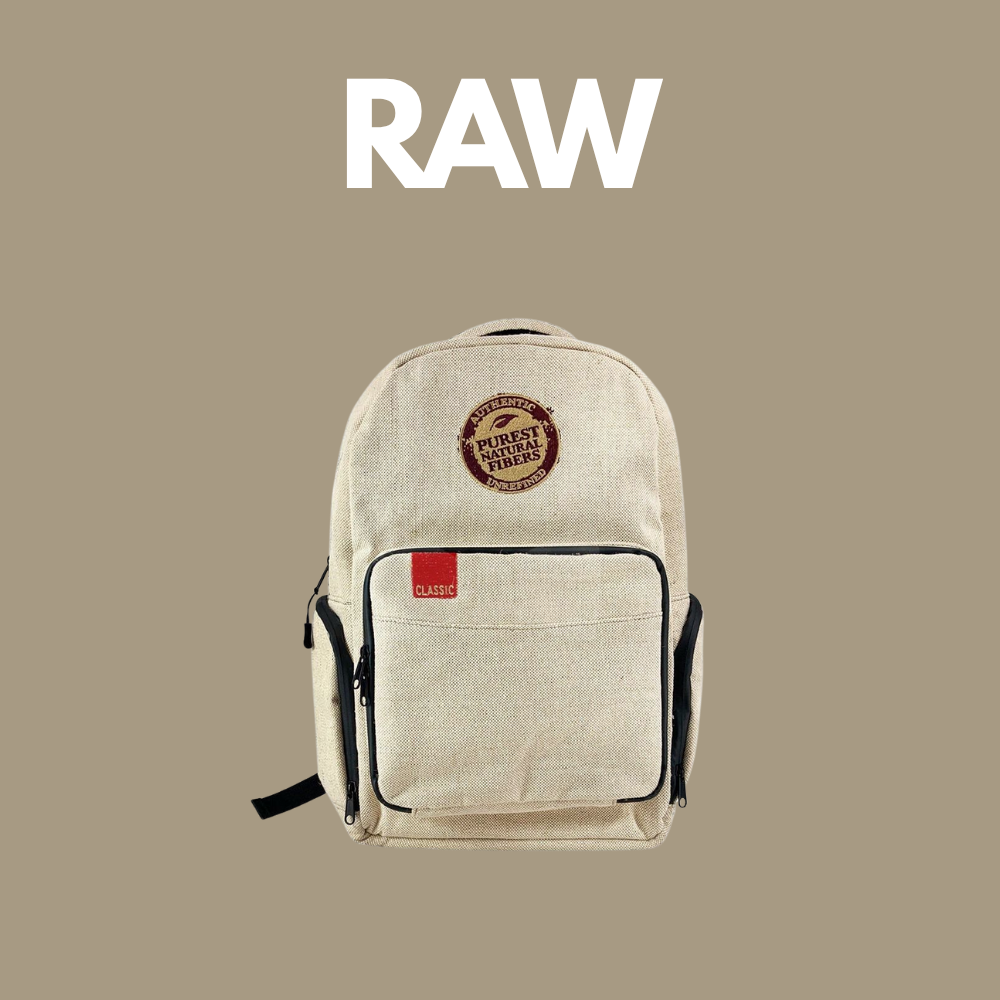
A lockable backpack makes sense when you carry more, move through busy spaces, or want one container for daily life and trips. If that fits your use case, we stock options like the Ooze Smellproof Backpack Classic with Combo Lock so you can prioritize compartments plus controlled access in one setup.
Pick the bag that stays sealed in real life
If your current bag still leaks smell in public, the fix is rarely “more marketing.” It is usually a worn carbon lining, a zipper that does not fully seal at the ends, or a bag that is overstuffed for what you carry. That is why we recommend choosing by carry style first, then verifying you are getting carbon lining plus a closure you can actually keep shut every time.
At General Shop, you can compare proven, carbon-lined options side by side and choose what matches your daily routine: the Ooze Smellproof Wristlet Bag ($14.99) for quick, minimal carry, the Ooze Smellproof Crossbody Bag ($29.99) for hands-free daily use, or the Blazy Susan Fanny Pack ($29.99) for on-body discretion. Pick your format, size it so it closes easily, then replace it when your sniff test tells you it is time.
Frequently Asked Questions
How does carbon lining in smell proof bags work?
Activated carbon has a highly porous structure that traps odor compounds before they pass through the fabric. It works best when the carbon layer is continuous and the bag stays fully closed, so odor is not escaping at the zipper or seams.
Are smell proof bags completely odor proof or just odor reducing?
They are odor-reducing, not absolute. You get the best results when you avoid overstuffing, close the zipper fully, and keep the bag out of heat and humidity that can push odor outward faster.
How long do smell proof bags remain effective?
Most carbon lining performs for months to years depending on how often you use it and how you store it. Heat, humidity, and heavy odor loads can shorten the cycle, so plan to replace the bag when your at-home sniff test shows the lining is saturating.



Leave a comment
This site is protected by hCaptcha and the hCaptcha Privacy Policy and Terms of Service apply.